Long-Term Damage From Delayed Roof Repairs
Delayed roof repairs can cause escalating long term damage beyond the initial leak. National Roofing Services documents progressive issues and offers timely repair solutions. Call 303-555-7788 to prevent further deterioration and save on total repair costs. Acting now preserves structural integrity and indoor air quality.
When a visible drip becomes the symptom of a larger problem, homeowners often underestimate how quickly a small roof issue can cascade into multiple failures. National Roofing Services provides clear documentation and practical interventions to halt that progression. Our team assesses the immediate damage and identifies hidden threats so you make informed decisions that protect your investment and your family's health.
How a single leak becomes multiple problems
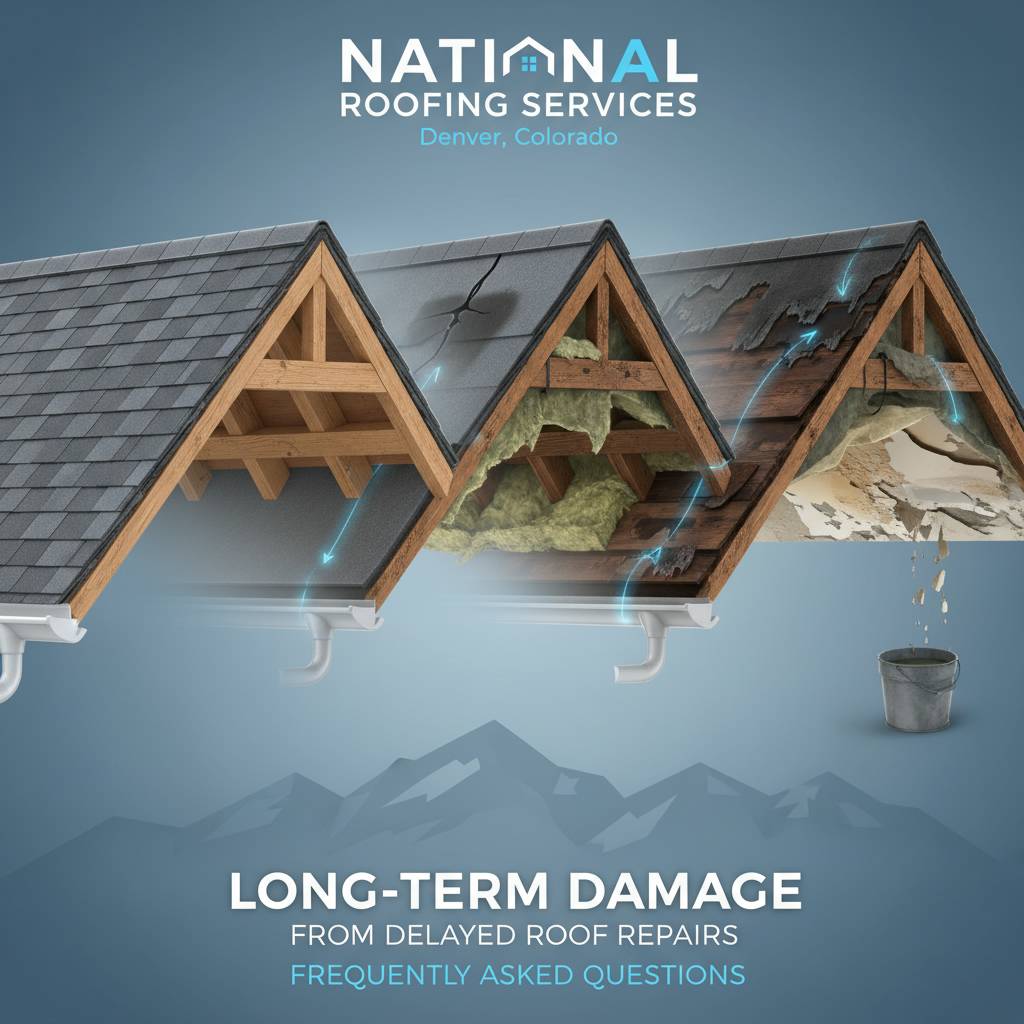
A leak starts where water penetrates roofing materials, but that moisture rarely stays put. It follows the path of least resistance-running along roof decks, pooling against flashings, soaking insulation and migrating into wall cavities. Over weeks and months, this movement expands the affected area and makes repairs progressively more invasive and expensive. Recognizing early signs and acting quickly prevents that spread.
Long-term damage from delayed roof repairs often shows up in places you would not immediately associate with a roof problem: stained ceilings, soft spots in attic floors, or persistent musty odors in living spaces. What begins as cosmetic staining can become structural rot, compromised vapor barriers, and airborne mold that affects indoor air quality. Addressing the source at the roof level is the most effective way to stop recurring interior symptoms.
Typical progression timeline
- Immediate (daysweeks): visible stains, active dripping, wet insulation.
- Short term (weeksmonths): insulation compression, paint failure, localized rot of roof deck or fascia.
- Medium term (months1 year): structural weakening of rafters, spread of mold, HVAC contamination, electrical risk increases.
- Long term (1 years): extensive structural repairs, interior reconstruction, potential loss of resale value and insurance complications.
Structural consequences: from shingles to framing
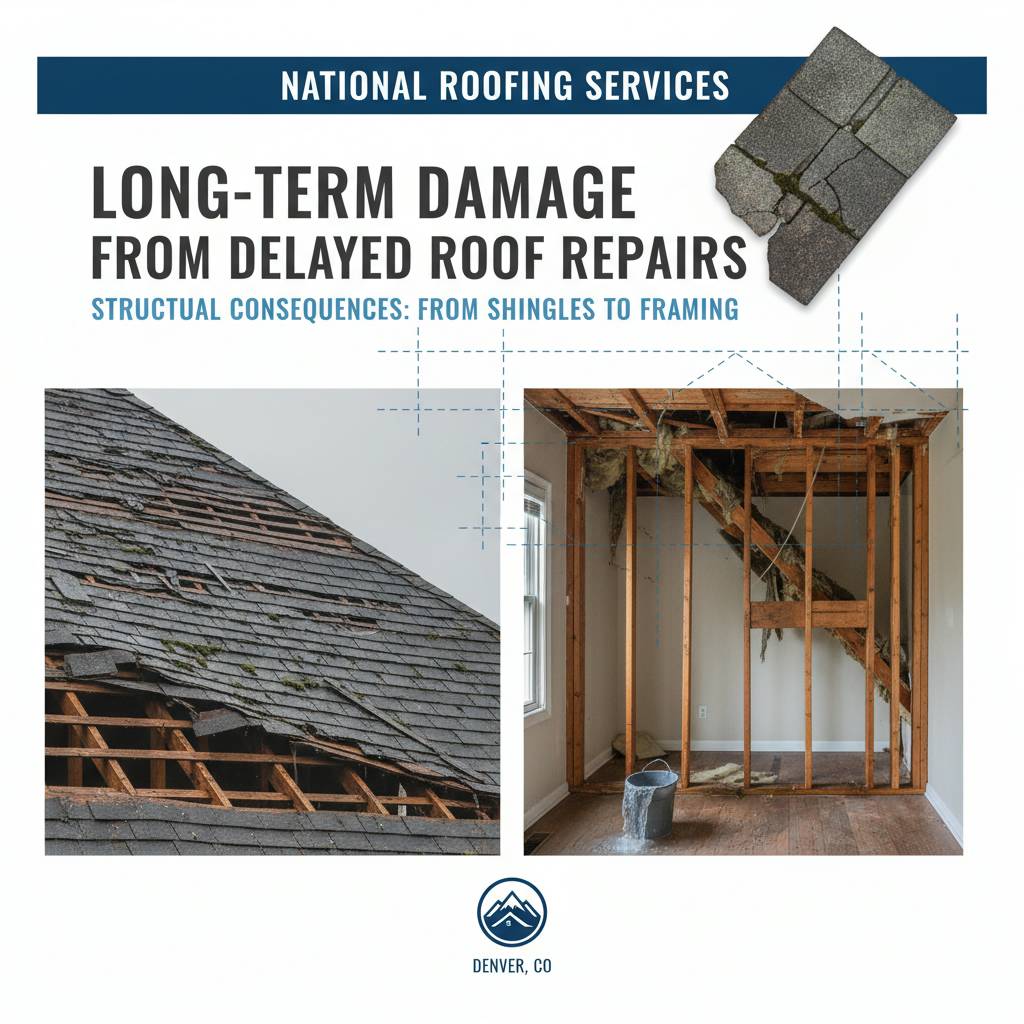 Shingles and underlayment are the first line of defense and often show wear before underlying components are compromised. When repairs are delayed, water penetrates past those layers and begins to weaken the roof deck and framing components. Over time, plywood or OSB roof sheathing can delaminate, lose load-bearing capacity, and allow roof sag or failure that requires full sheathing replacement rather than a minor patch.
Primary framing elements such as rafters, trusses, and joists can also suffer. Where moisture is persistent, fasteners corrode and wood fibers degrade, resulting in decreased structural integrity. In severe cases, compromised framing demands engineered repair or replacement to restore roof load paths-an outcome far more costly than timely localized repairs.
Hidden moisture, mold, and indoor air quality risks
Moisture trapped in attics and wall cavities creates an ideal environment for microbial growth. Mold colonies can establish within days under warm, humid conditions and will continue to spread while moisture remains. This not only damages building materials but also releases spores and volatile organic compounds (VOCs) into the living environment, which can aggravate respiratory conditions and reduce overall indoor air quality.
Insulation is particularly vulnerable. Once saturated, batts and blown insulation lose thermal performance and can no longer regulate indoor temperature efficiently. That degradation increases energy costs and contributes to condensation cycles that perpetuate moisture problems. Thorough drying and targeted replacement of compromised insulation are essential steps to restore both efficiency and healthful indoor air conditions.
Secondary system failures and interior damage
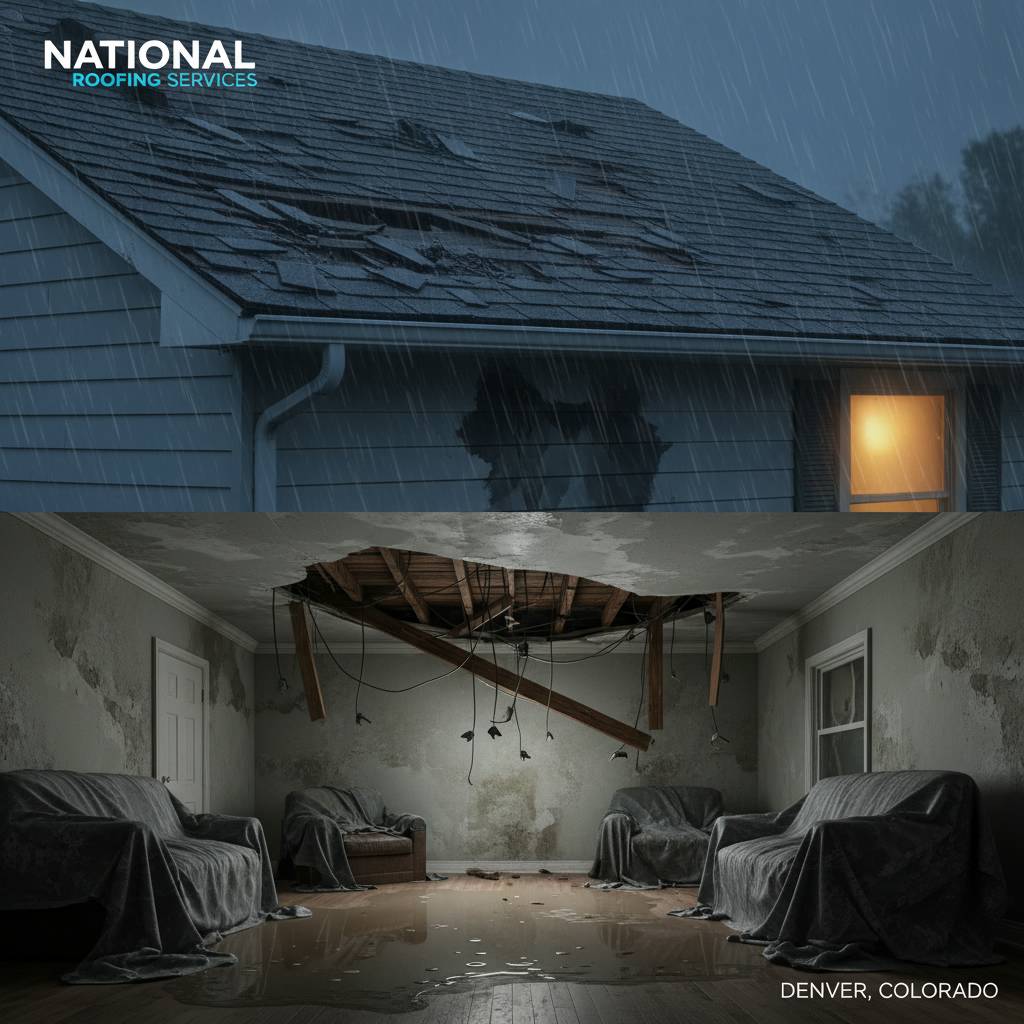 Water intrusion rarely respects boundaries. Electrical systems routed through ceilings and walls can short circuit or corrode when exposed to moisture, creating safety hazards and increasing the complexity of repairs. Interior finishes-drywall, paint, trim, flooring and cabinetry-also sustain damage that often requires removal and replacement to fully remediate the problem.
Personal property is at risk as well. Prolonged exposure to a damp environment can ruin textiles, documents, electronics and wood furnishings. Homeowners may learn after the fact that delayed roof repairs triggered a chain reaction culminating in substantial content loss and prolonged displacement while restoration work takes place.
Cost trajectory: why early repair saves money
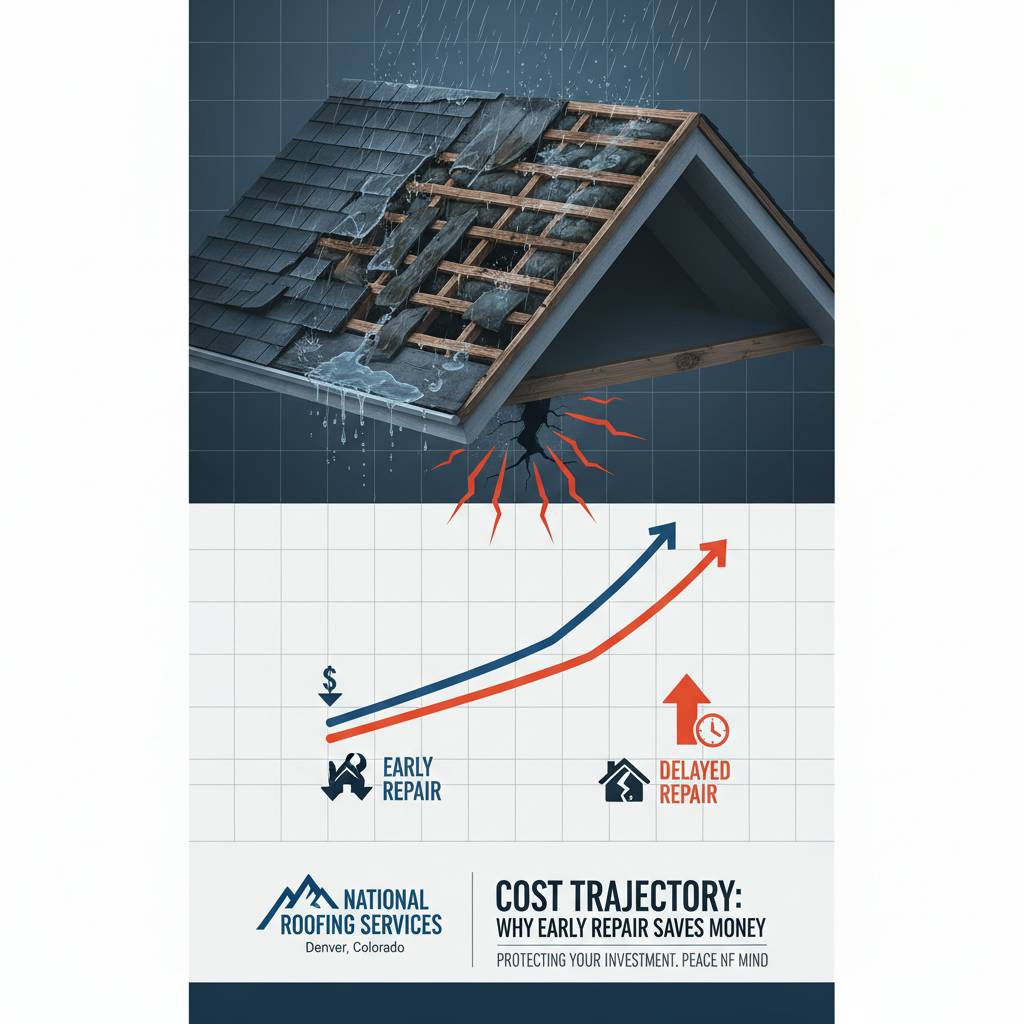 Costs escalate in predictable ways when roof repairs are delayed. What begins as a small roofing patch can turn into a full roof section replacement, followed by rafter or truss repair, then attic remediation, insulation replacement, electrical repairs, interior reconstruction, and mold remediation. Each step multiplies labor, materials, and project duration.
- Minor patching and localized repairs: lowest cost, quickest turnaround.
- Sectional replacement and decking repair: moderate cost, requires more materials and labor.
- Structural replacement and full-house interior remediation: highest cost, lengthy disruption.
Case in point: a simple flashing failure allowed slow leaks over two seasons. The homeowner postponed repair due to weather and cost concerns. Months later, the leak had rotted several rafters, contaminated insulation, and spread mold into wall cavities-turning a modest repair into a multi-room restoration with replacement roof decking and HVAC coil cleaning. That escalation illustrated how the seemingly small choice to wait substantially increased the final bill.
Inspection, repair, and restoration solutions by National Roofing Services
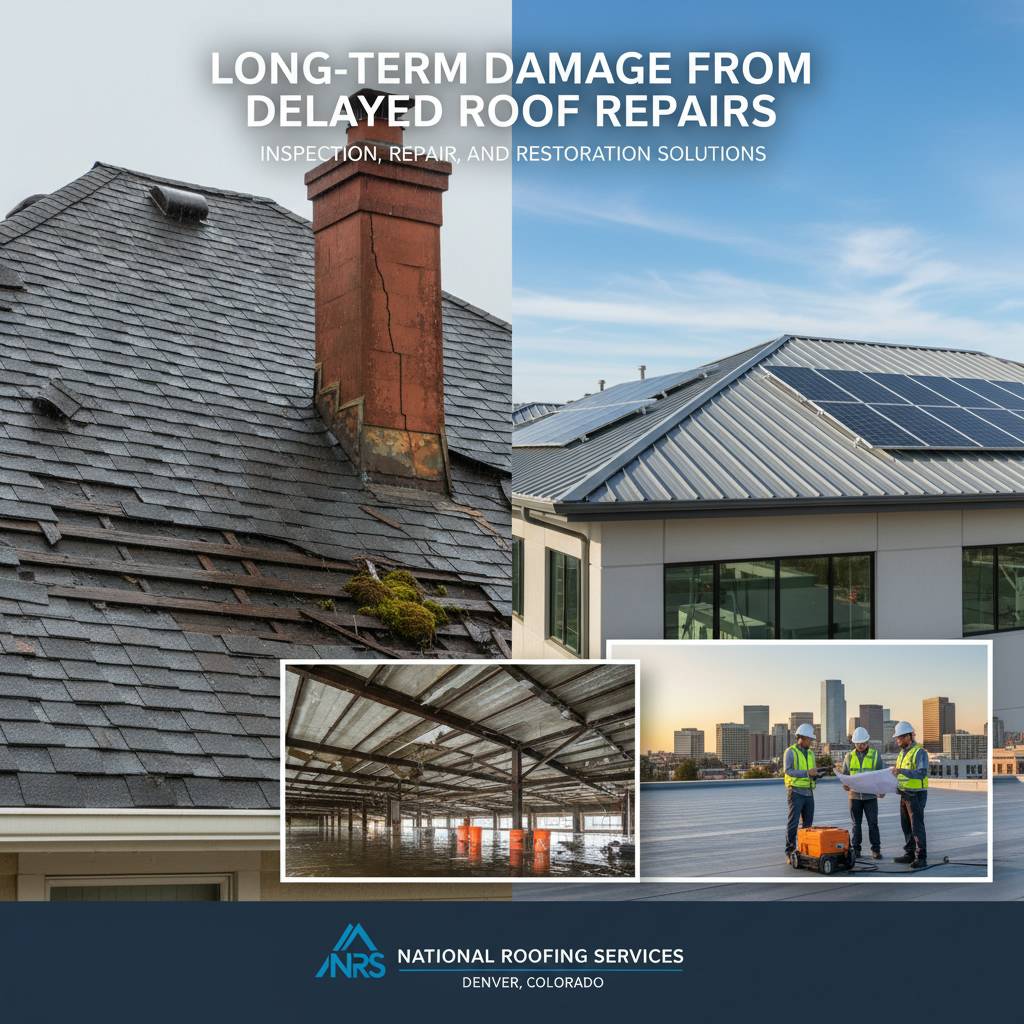 National Roofing Services approaches every roof concern with a process designed to minimize long-term damage: thorough inspection, immediate containment when needed, prioritized repairs, and documentation of all findings. Our inspections look beyond visible leaks to assess attic moisture levels, flashing integrity, gutter function, and interior signs that indicate hidden water migration paths. We then provide a prioritized repair plan focused on stopping the problem at its source.
When emergency action is required, National Roofing Services offers temporary tarping, targeted drying, and controlled ventilation to reduce further damage before permanent repairs begin. For long-term solutions we use industry-standard materials and best practices to replace or reinforce underlayment, decking, flashing, and shingles, and we coordinate with licensed electricians or HVAC specialists when those systems are affected.
Typical repair and restoration workflow
- Initial assessment and moisture mapping to document affected areas.
- Emergency containment (tarping, controlled drying) to prevent further intrusion.
- Targeted repair of roofing layers, flashings, and penetrations.
- Attic remediation, insulation replacement, and HVAC checks as needed.
- Interior restoration and final verification including moisture testing and photographic documentation.
Our documentation serves two important purposes: it shows homeowners the full scope of long-term damage from delayed roof repairs and provides the evidence insurers often require. NRS and the National Roofing Services crew make sure every step is recorded so you understand what was done and why, and so claims processes move more smoothly when applicable.
Frequently asked questions
How quickly can a roof leak cause structural damage?
Structural damage depends on leak severity, weather exposure, and how long moisture persists. A small roof leak can begin to degrade insulation and underlayment within weeks; significant structural weakening typically develops over months if the leak is persistent. Early inspection and temporary containment dramatically reduce long-term effects.
Can I wait until spring to fix a leak?
Delaying repairs through an entire winter or wet season increases the likelihood of escalation. Freezing and thawing cycles, heavy rains, and wind-driven moisture all magnify damage. If scheduling conflicts arise, consider temporary measures and an immediate professional assessment to prevent compound damage.
Will my homeowner's insurance cover long-term damage?
Coverage varies by policy and cause. Insurance often covers sudden damage from storms but may exclude gradual maintenance-related failures. Prompt documentation of the cause and timely repair reduces disputes. National Roofing Services can provide the inspection reports and photographic evidence insurers typically request to support a claim.
Act now to protect your home and indoor air quality
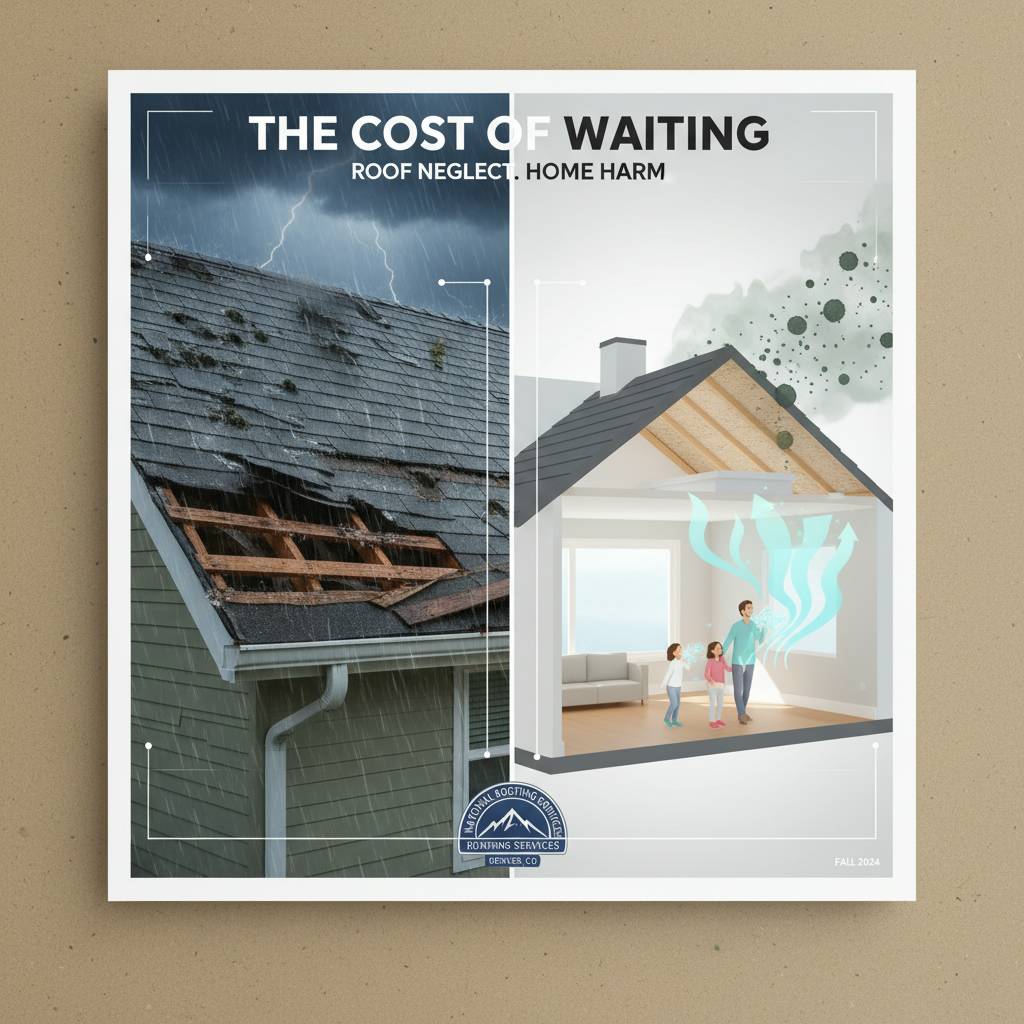
Every month a roof problem is left unaddressed increases the chance that a repair will become a larger restoration project. Protecting structural integrity, preserving indoor air quality, and avoiding expensive secondary failures all depend on early, effective intervention. The right repair at the right time stops the progression and saves money in the long run.
Take action today: For a thorough inspection, documented findings, and a prioritized repair plan, contact National Roofing Services at 303-555-7788. Our team will evaluate your situation, outline options, and act quickly to prevent the long-term damage from delayed roof repairs so you can retain the value and safety of your home.
We look forward to helping you safeguard your property and health. Call National Roofing Services at 303-555-7788 to arrange an inspection or emergency response. Prompt action preserves your roof, your home's structure, and your indoor air quality.