Signs Of Roof Water Damage
Homeowners often miss early signs of roof water damage. At National Roofing Services we help them identify warning signals and act quickly. Call us at 303-555-7788 for a fast evaluation. Early detection saves money and prevents larger repairs.
Roof water damage is rarely dramatic at first - it begins with small changes that most homeowners overlook until they become costly. At National Roofing Services, we focus on helping property owners recognize subtle clues, understand risks, and take decisive action. Early detection is the single best way to reduce repair costs, limit structural harm, and protect indoor air quality and insulation performance.
Why early detection of roof water damage matters
Water intrusion affects more than just shingles. Once moisture penetrates roofing layers, it can compromise underlayment, sheathing, attic insulation, ceiling finishes, and even structural framing. That cascade multiplies the cost and complexity of repairs. Finding the signs of roof water damage early allows targeted repairs that address the source rather than repeated cosmetic fixes.
Beyond property value and repair bills, untreated roof leaks create conditions for mold growth and wood rot, which can pose health risks and reduce indoor air quality. Identifying problems early protects both the building and the people who live in it. A prompt professional evaluation from National Roofing Services can turn a minor patch job into a durable, long-term solution.
Common signs of roof water damage
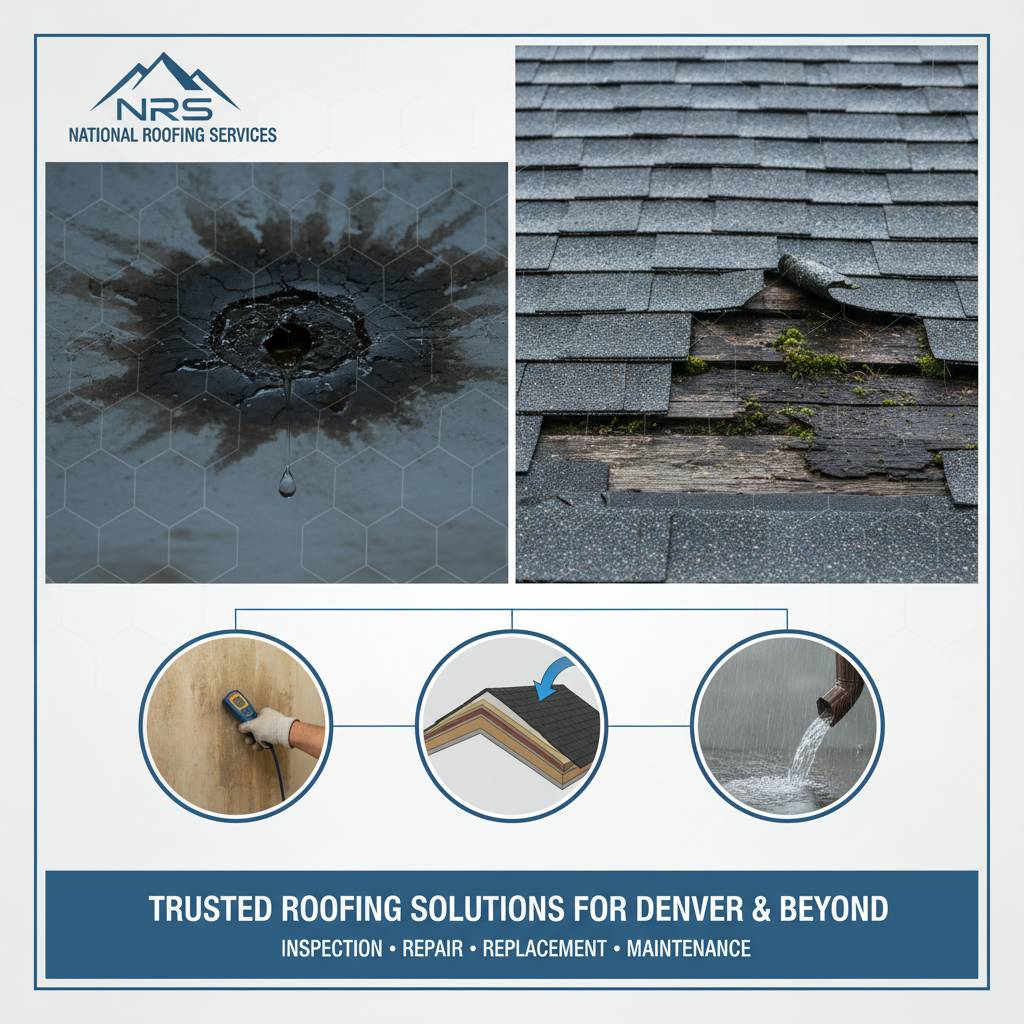 Knowing what to look for is the first step toward protection. Below are the most frequent signs of roof water damage, organized so you can check interior and exterior clues quickly. Many of these indicators are visible without special tools and can be confirmed by a professional during a routine inspection.
Interior indicators
- Stained or discolored ceilings and walls - brown, yellow, or gray marks that grow over time.
- Peeling, bubbling, or sagging paint and wallpaper near exterior walls or ceilings.
- Musty or moldy odors in attic spaces, closets, or upper rooms consistently after rain events.
- Visible mold or mildew on attic insulation, roof decking, or inside eaves.
- Intermittent dripping or wet spots on ceilings that appear after storms but may dry between events.
Interior signs are often the first reason homeowners call for help, but they can be misleading without a roof-focused inspection. For example, a plumbing leak or condensation issue can mimic roof leaks. That's why professionals at National Roofing Services perform a systematic evaluation to determine the true source.
Exterior indicators
- Missing, cracked, or curling shingles, which allow water to seep beneath the protective layers.
- Damaged flashing around chimneys, vents, and valleys - common points of entry for moisture.
- Granule loss in gutters and downspouts, indicative of aged or failing shingles.
- Dark streaks or algae growth on roof surfaces where water pools or flows irregularly.
- Rotting or soft spots on fascia, soffits, and roof edges where prolonged moisture contact occurs.
Exterior indicators can point directly to the roof system as the problem source. A thorough inspection includes both rooftop assessment and attic checks to correlate visible roof defects with interior effects. This two-sided approach reduces unnecessary repairs and targets the true problem areas.
How to inspect your roof safely and effectively
Many homeowners attempt to climb ladders and walk roofs to diagnose problems, which can be dangerous. Safety comes first: if you're not comfortable or the roof pitch is steep, call a professional. When you do inspect yourself, follow a methodical process and use binoculars, a camera, and a stable ladder to minimize risk.
Start with a visual exterior survey from the ground. Look for visible damage after storms, check gutters for excessive granules and debris, and photograph suspicious areas. Then, inspect the attic with a flashlight for signs of daylight penetration, wet insulation, or staining on the underside of roof sheathing. Document everything you find; photos and dates help professionals assess progression.
Step-by-step homeowner checklist
- After heavy rainfall, inspect ceilings and upper walls for fresh stains.
- Examine gutters - granules and brownish residue indicate shingle wear.
- Use binoculars to check for missing shingles, cracked flashing, or lifted edges.
- Inspect the attic during daylight for light spots or wet insulation and note any musty odors.
- Record and photograph issues, then schedule a professional evaluation if you find multiple or severe signs.
Systematic inspections help you separate urgent issues from routine maintenance. Even if damage appears minor, documenting progression and scheduling a quick evaluation with National Roofing Services can prevent a small leak from turning into a major repair.
Immediate steps to take when you detect water damage
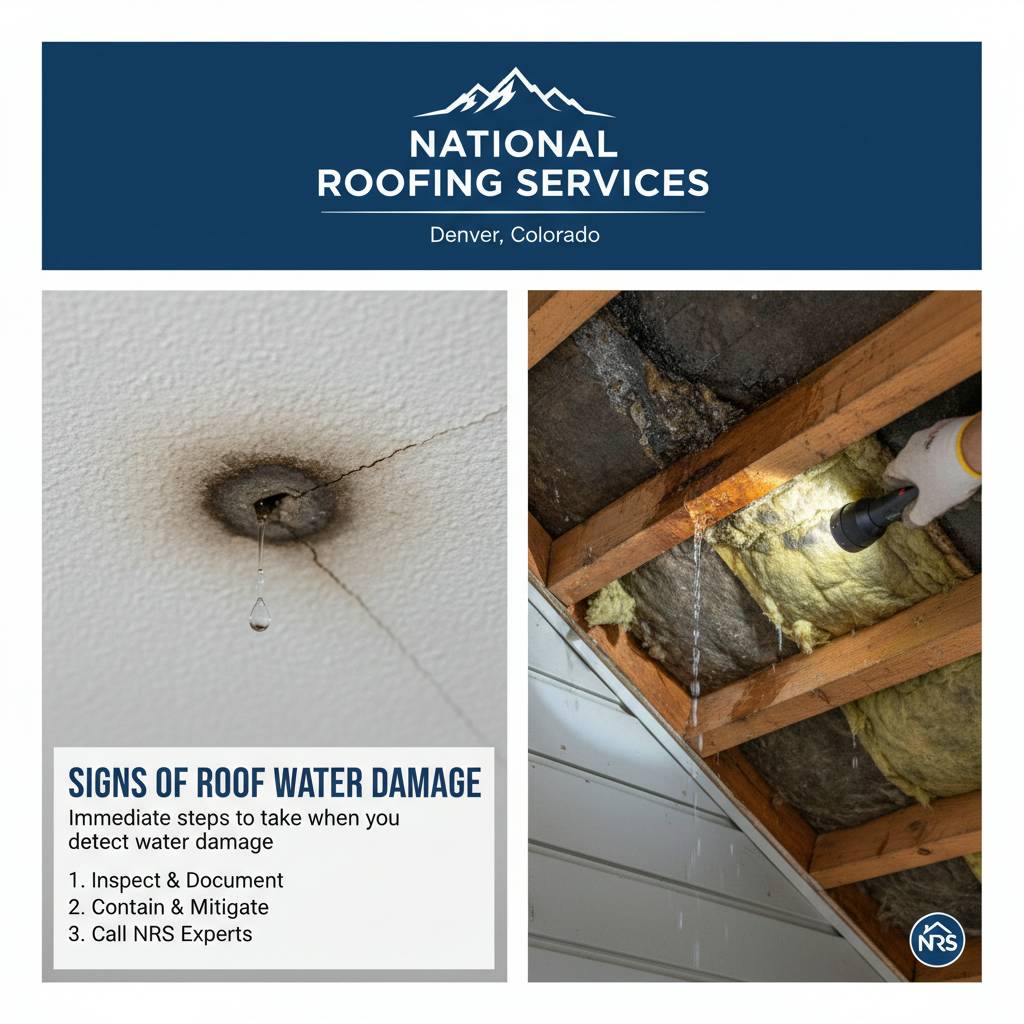 When you discover the signs of roof water damage, quick, pragmatic steps minimize harm before professional help arrives. Temporary measures can reduce further interior damage, protect belongings, and create a safer environment while you arrange for permanent repairs.
Short-term actions to reduce damage
- Move furniture and valuables away from wet areas and place buckets beneath active drips.
- Use towels or plastic sheeting to protect flooring and furnishings from moisture spread.
- Avoid using fans that blow across mold-prone areas; instead, use controlled ventilation or dehumidifiers as recommended by professionals.
- Do not attempt complex roof repairs yourself if you lack experience; temporary tarps can be applied by a pro safely.
Temporary actions are not a substitute for a proper roof repair. They buy time and reduce collateral damage but should be followed by a thorough roof evaluation. Call National Roofing Services for a fast onsite assessment - our team can recommend the correct immediate and long-term steps based on the specific signs of roof water damage you're seeing.
What a professional evaluation and repair typically involves
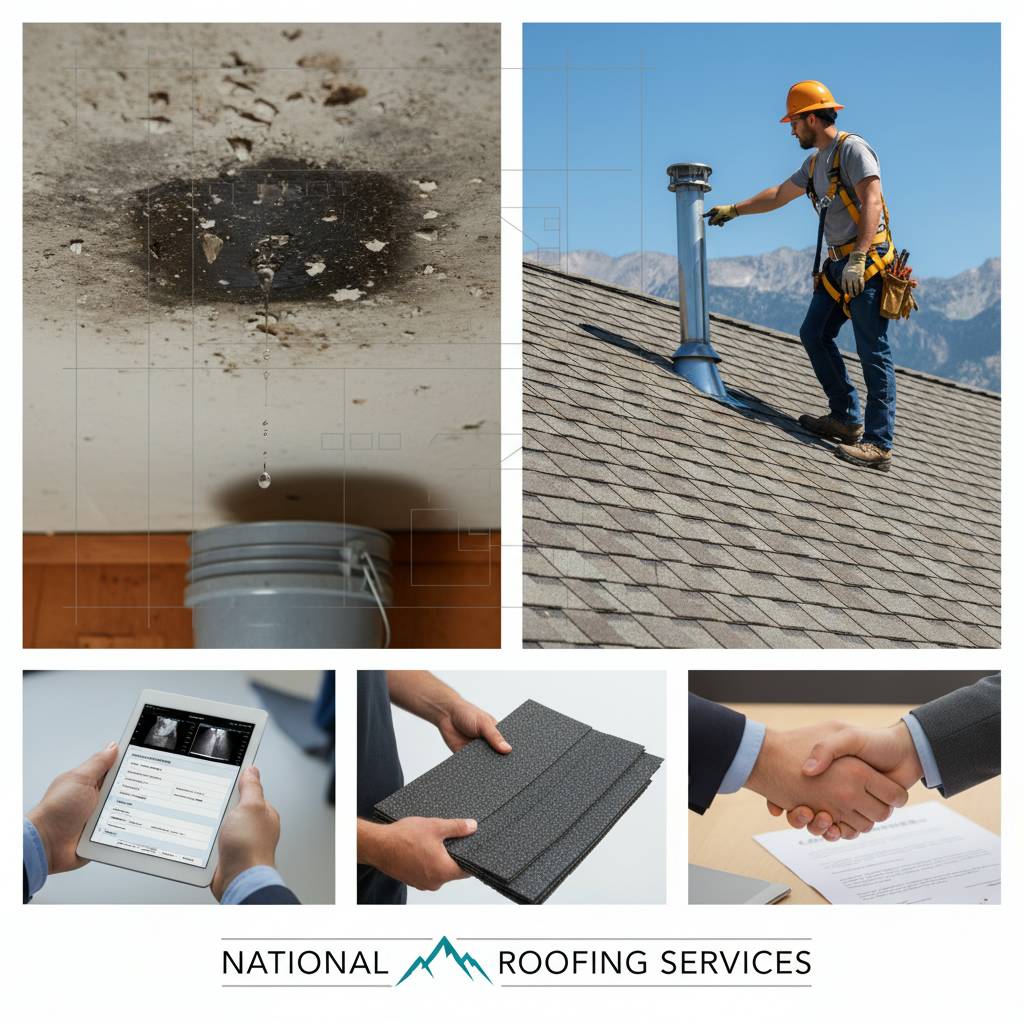 When a qualified roofing contractor evaluates roof water damage, they inspect multiple layers: shingles and flashing, underlayment, roof decking, attic insulation, and interior finishes. A complete assessment isolates the entry point of water and documents the full extent of affected materials so repairs address both cause and consequence.
Repair strategies vary by severity. Minor issues like isolated flashing failures or a few damaged shingles may be repaired quickly. Extensive water intrusion that has affected sheathing or structural members requires partial or full roof deck replacement and may include insulation and drywall remediation. A reputable contractor will provide a clear, written scope of work and explain options that balance longevity and budget.
Questions to ask your contractor
- What is the likely entry point for the water, and how can you prove it?
- Do you recommend repairs or replacement, and why?
- What materials and warranties do you provide for labor and products?
- Can you provide a written estimate and a timeline for the work?
Good contractors document findings with photos and explain material choices. National Roofing Services prides itself on transparent inspections and clear recommendations. If you prefer, ask for references and details about insurance claim assistance - we often help homeowners navigate claims where roof damage is covered by policy.
How to choose a trusted roofing professional
 Choosing the right contractor matters. Look for local, licensed professionals with insurance, verifiable references, and a clear warranty policy. Avoid high-pressure sales tactics and insist on written estimates that break down labor, materials, and expected timelines. A trustworthy roofer stands behind their work and communicates plainly about risks and trade-offs.
Verify credentials: licensing where required, contractor insurance that covers property and worker injuries, and customer reviews that speak to reliability and follow-up service. Request a written contract and a project schedule to minimize surprises. A short vetting process up front protects you from costly mistakes later.
Red flags to avoid
- Contractors asking for unusually large upfront payments or cash-only deals.
- No physical address or poor online presence with multiple negative reviews.
- Vague scope of work or no clear warranty for materials and labor.
- Pushing unverified insurance claims or insisting you sign immediately.
National Roofing Services provides clear contracts, transparent pricing, and documented warranties. We encourage homeowners to compare estimates and choose the contractor that offers the best combination of experience, communication, and value.
Preventive maintenance to reduce future water damage risk
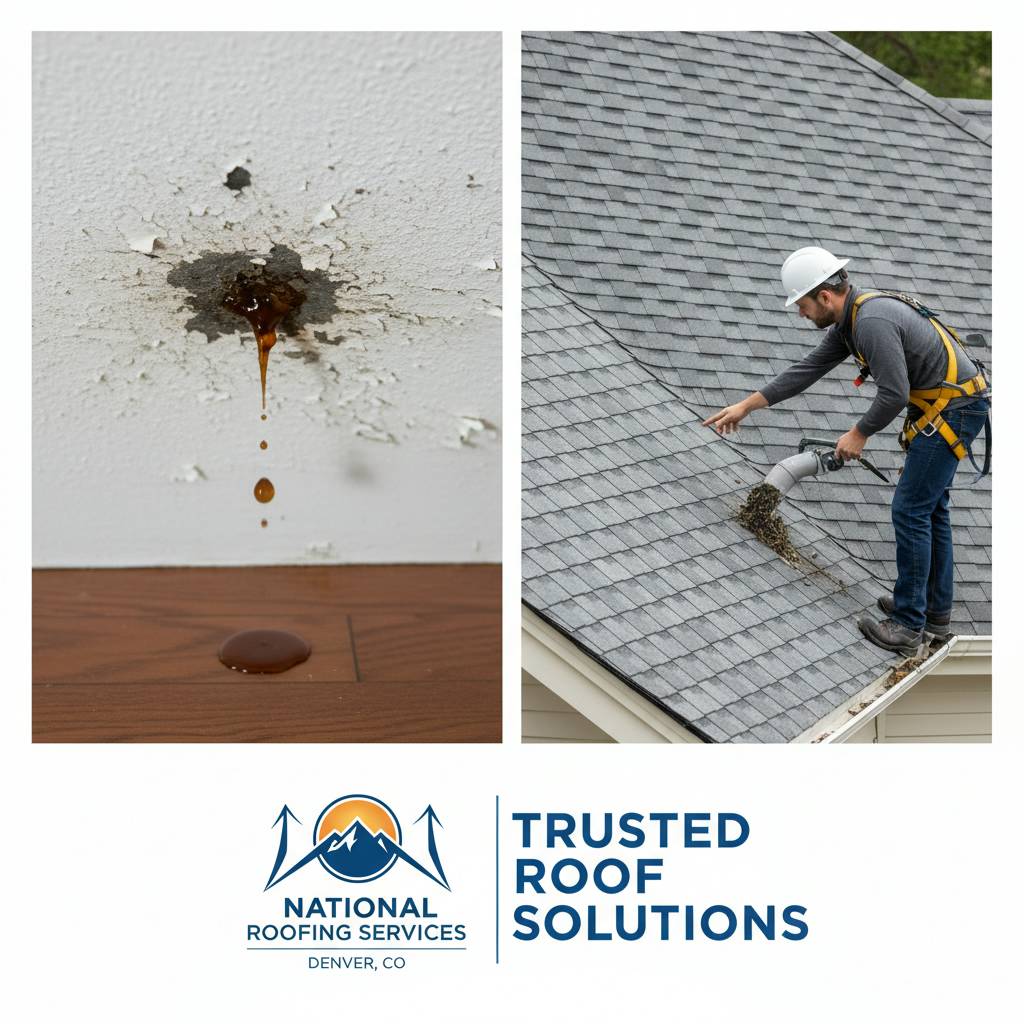 Prevention is the most cost-effective strategy to avoid signs of roof water damage. Regular maintenance extends roof life and prevents small issues from becoming emergencies. Seasonal checks, professional tune-ups, and prompt attention to vegetation and gutter systems go a long way toward protecting your investment.
Key maintenance activities include clearing debris from gutters, ensuring downspouts direct water away from the foundation, trimming overhanging branches that abrade shingles, and scheduling professional inspections every few years or after severe weather. Replacing failing flashing and resealing roof penetrations proactively often costs far less than full deck replacement caused by prolonged leaks.
Simple maintenance checklist
- Clean gutters and downspouts twice a year and after major storms.
- Remove moss and debris from the roof surface carefully to avoid damage.
- Inspect attic insulation and ventilation to prevent condensation-related issues.
- Have a licensed roofer inspect flashing and penetrations every 13 years.
Maintaining documentation of inspections and repairs helps with resale value and insurance claims. National Roofing Services offers maintenance plans tailored to common roof types that include prioritized scheduling and discounted repairs for plan members.
Frequently asked questions
Q: How quickly can water damage escalate? A: Water damage can progress from a small leak to structural rot within months in humid climates or within a season in colder regions where freeze-thaw cycles are present. Quick action reduces long-term costs.
Q: Will my insurance cover roof water damage? A: Coverage depends on your policy and the cause of damage. Sudden storm damage is frequently covered, while gradual wear and lack of maintenance may be excluded. Keep inspection records to support claims and ask professionals for documentation.
Q: Can I patch a leak myself? A: Temporary patches like roof sealant or tarps can address immediate dripping, but long-term solutions require diagnosing entry points and repairing underlying materials. Untrained repairs often hide the real issue and lead to recurring leaks.
Closing and next steps
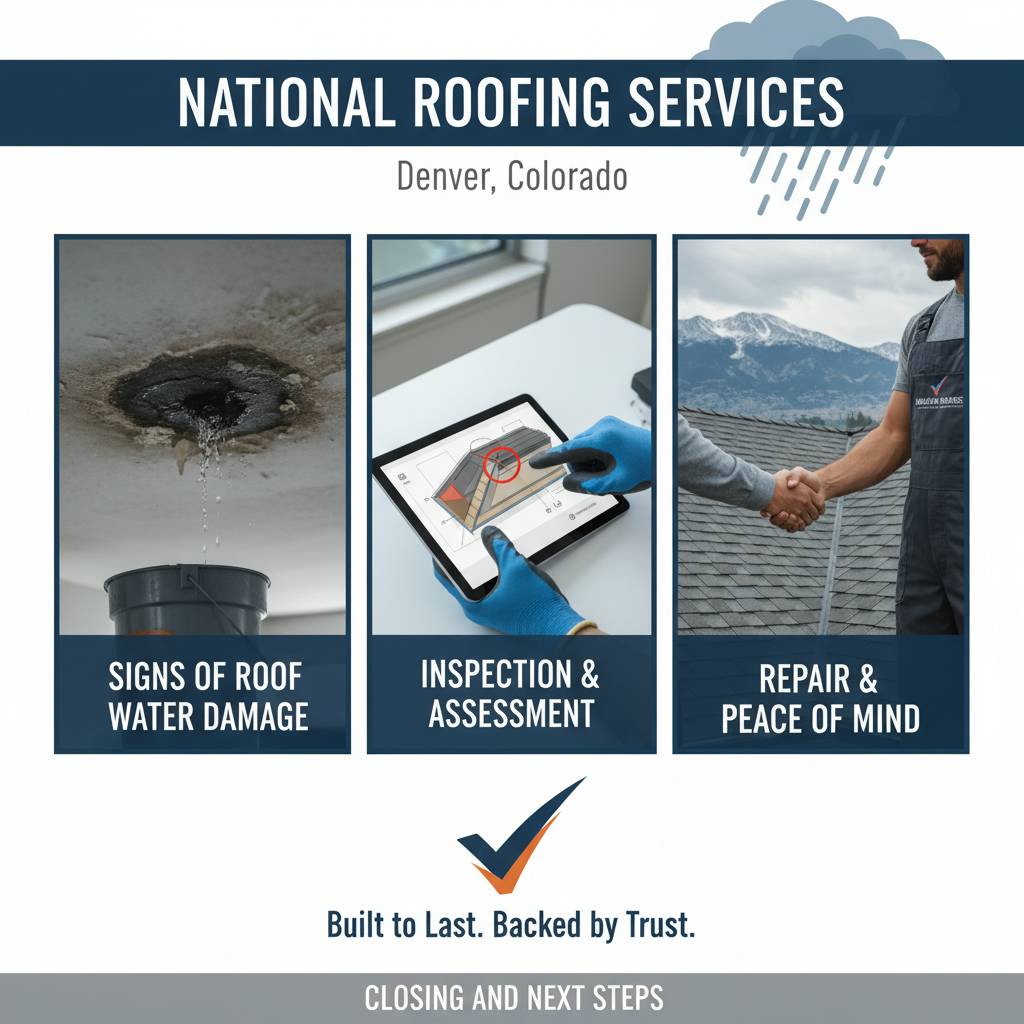 If you suspect any of the signs of roof water damage described here, don't wait for the problem to get worse. Early evaluation and repair save money and protect your home's structural integrity. National Roofing Services is available to perform thorough inspections, document findings, and recommend the right course of action tailored to your situation.
Call National Roofing Services today at 303-555-7788 for a fast, professional evaluation.
Prefer to speak with someone directly? Ask for NRS when you call and we'll prioritize your inspection and provide a clear, no-surprise estimate. Protecting your home from water damage starts with a single call - reach out now to schedule an assessment.